Greatest NBA Power Forwards of All Time
The greatest NBA power forwards of all time, running from Bob Pettit's 1950s Hawks through Tim Duncan's Spurs dynasty and Giannis Antetokounmpo's two-way peak in Milwaukee. Entries qualify on sustained production at the four, whether as a low-post scorer, a floor-spacing shooter, or a defensive anchor, so rebounding specialists and stretch bigs both belong here. The top of the list separates itself on peak dominance paired with longevity, not on championship count alone.
Highlights for Greatest NBA Power Forwards of All Time
Updated
How this ranking works
Seed POV: Two-way peak dominance weighted against career longevity at the four
A reasonable order starts with who controlled games at both ends for the longest, then adjusts for era and for the help around them. Duncan's five titles and defensive anchoring make the top spot straightforward. The argument runs hot just below, where Nowitzki's offensive ceiling and Giannis's two-way peak compete with Malone's volume and Barkley's ringless dominance.
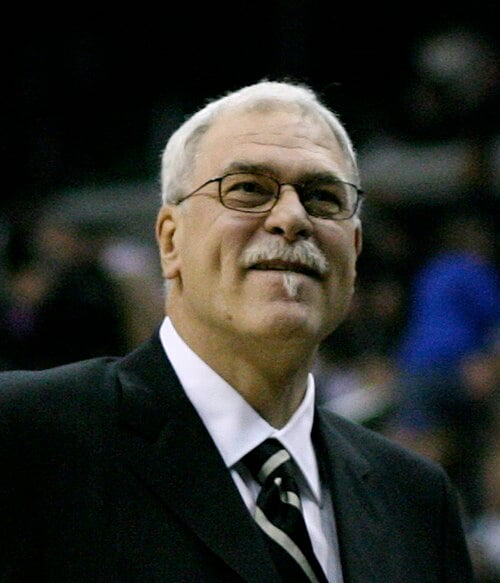
Tim Duncan opens at number 1 in Greatest NBA Power Forwards of All Time. That is Ranklist's starting order, not a community verdict: nobody has ranked this list yet.
New to Ranklist? Each visitor's ranking nudges the community order. Sign up free →
Global Ranking
Tim Duncan
Five championships with San Antonio between 1999 and 2014, back-to-back MVPs in 2002 and 2003, and three Finals MVP awards across 19 seasons with one franchise. His Game 6 clincher in the 2003 Finals went 21 points, 20 rebounds, 10 assists and 8 blocks, two short of a quadruple-double.
Karl Malone
Utah kept him for 18 seasons on John Stockton's pick-and-roll, and 36,928 career points trail only LeBron James and Kareem Abdul-Jabbar. Two MVPs, in 1997 and 1999, never produced a ring, as the Jazz lost the 1997 and 1998 Finals to Michael Jordan's Bulls.
Dirk Nowitzki
Twenty-one seasons in Dallas produced 31,560 points, the highest career total by any player born outside the United States, plus the 2007 MVP. The 2011 title run settled the ceiling question, with Dallas beating Miami in six games and Nowitzki taking Finals MVP.
Giannis Antetokounmpo
Back-to-back MVP awards in 2019 and 2020 plus Defensive Player of the Year in 2020, joining Michael Jordan and Hakeem Olajuwon as the only players to take both in one season. Game 6 of the 2021 Finals brought 50 points and 14 rebounds, ending Milwaukee's drought since 1971.
Charles Barkley
At 6-foot-6 he led the NBA in rebounding during 1986-87 at 14.6 per game, a rare feat for anyone listed under 6-foot-8. The 1993 MVP season carried Phoenix to the Finals against Chicago, and career marks of 22.1 points and 11.7 rebounds hold up against anyone here without a ring.
Kevin Garnett
Minnesota's 2004 MVP was traded to Boston in 2007 and immediately won both the 2008 championship and Defensive Player of the Year. Fifteen All-Star selections and 12 All-Defensive teams reflect a big who made switching everything a viable defensive philosophy.
Bob Pettit
The NBA's first MVP award went to Pettit in 1956, and he collected a second in 1959. His 50 points in Game 6 of the 1958 Finals gave the St. Louis Hawks the only Finals series Bill Russell's Celtics ever lost, and he retired at 26.4 points and 16.2 rebounds a night.
Kevin McHale
Three championships in Boston next to Larry Bird and Robert Parish, with consecutive Sixth Man of the Year awards in 1984 and 1985 before he moved into the starting lineup. He shot a league-best 60.4 percent from the field in 1986-87, and his up-and-under became teaching tape.
Elvin Hayes
As a rookie in 1968-69 he led the NBA in scoring at 28.4 per game, and no first-year player has won a scoring title since. A 1978 championship with the Washington Bullets, 12 All-Star selections and 27,313 career points reflect rare volume and durability.
Anthony Davis
Selected first overall in 2012 after a national title at Kentucky, Davis has led the NBA in blocks in three separate seasons. His 52 points in the 2017 All-Star Game were the highest single-game total in that event's history at the time, and the 2020 ring came in the bubble with the Lakers.
Dennis Rodman
Seven straight rebounding titles from 1991-92 through 1997-98, a stretch that peaked above 18 boards a game while he scored in single digits. Five rings across Detroit and Chicago and back-to-back Defensive Player of the Year awards in 1990 and 1991 fill out the case.
Chris Webber
Rookie of the Year in 1994 and the NBA's rebounding leader in 1998-99 at 13.0 per game, Webber ran the offense as a passing hub for the Sacramento teams that pushed the Lakers to seven games in the 2002 conference finals. Five All-Star trips and a 2001 All-NBA First Team followed.
Pau Gasol
Two championships alongside Kobe Bryant in 2009 and 2010 reframed a big man who had already won Rookie of the Year in 2002 with Memphis. Six All-Star selections, a Hall of Fame induction in 2023, and jerseys retired by both the Lakers and the Grizzlies mark the standing.
Draymond Green
Four titles in Golden State between 2015 and 2022, all built on a 6-foot-6 defender switching onto guards and centers alike, with Defensive Player of the Year honors in 2017. Taken 35th overall in 2012, he turned the small-ball five into a championship formula.
Blake Griffin
A unanimous Rookie of the Year in 2011 after losing his entire draft year to a knee injury, Griffin also took that season's Slam Dunk Contest by clearing a car. Six All-Star selections and five All-NBA nods followed as Lob City took its identity from his finishing.
Frequently asked questions
What is ranked number 1 in Greatest NBA Power Forwards of All Time?
Tim Duncan currently holds the number 1 position in Greatest NBA Power Forwards of All Time, ahead of Karl Malone and Dirk Nowitzki. Positions are recalculated from scratch every time somebody submits a new ranking, so the order shifts as opinions come in.
More in basketball


Greatest NBA Small Forwards of All Time
Best NBA Point Guards in History